Cyling Belgium & Northern France (Day 1)
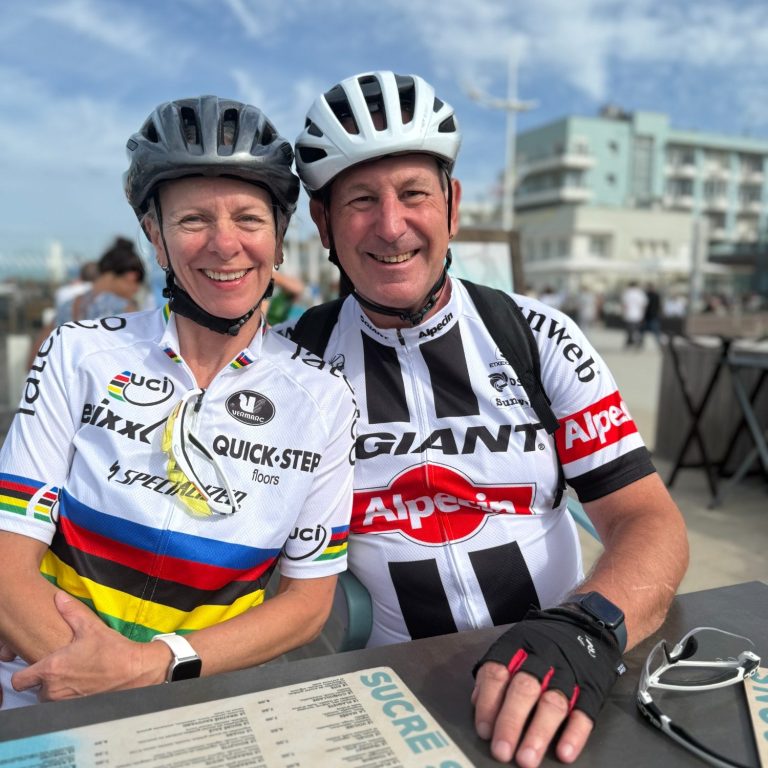
The journey began early with a hearty breakfast and a freewheeling ride down to Maidstone East station. Spirits were high as Shelley, Andrea, Gareth, and I rolled our fully loaded bikes onto the platform, torpedo tubes strapped firmly to the back, bulging with everything we’d need for a week of cycling through Northern France and Belgium.
Changing at Ashford International was our first small victory of the day, the lifts were working, and to our relief, they were just about big enough to squeeze in all four bikes.
Dover – Gateway to the Continent
A quick train ride brought us to Dover Priory, where enthusiasm met its first hurdle. With loaded bikes and heavy bags, we found the station staff less than helpful. Wrestling through ticket
barriers with torpedo tubes swinging and handlebars wedged in the gates was not the most graceful start, but it’s all part of the adventure (more about Dover Priory staff on our return journey…).
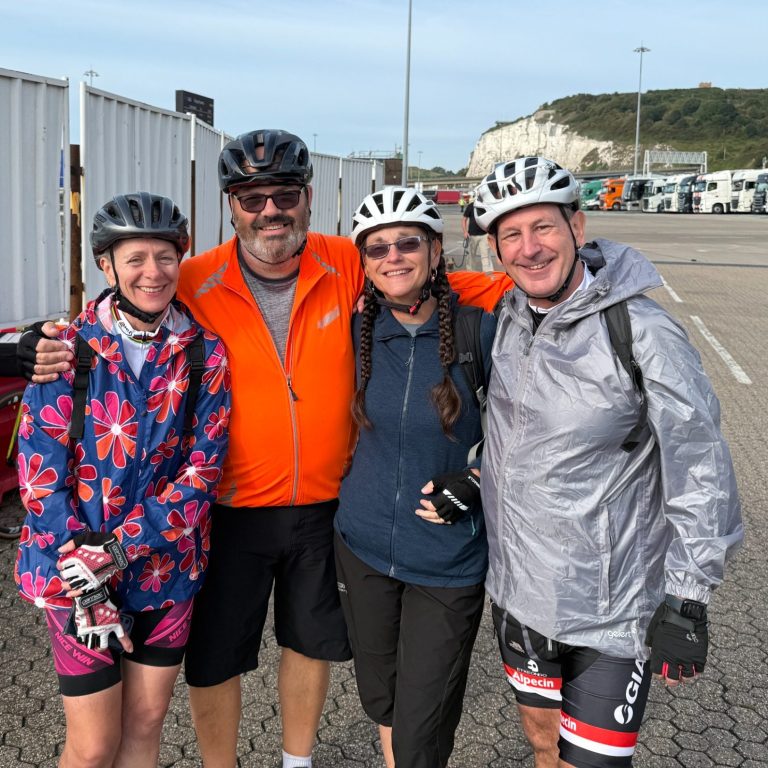
Thankfully, the short downhill into Dover Port was smoother sailing and navigating the port is surprisingly straightforward, you simply follow the painted red line through the checkpoints. Soon we were queuing with a cluster of fellow cyclists, swapping stories and travel tips in the morning sun.
Cycling onto the DFDS ferry was an exciting milestone. Bikes stowed up safely below deck, we headed straight for the Premier Lounge. Kevin, our steward, kept us well-fed with endless coffee, pastries, and a superb bacon and sausage bap and as many glasses of prosecco as we wanted. Because of our bikes we only had the one. We were set for the miles ahead.
Dunkirk – Where History Meets the Present
Two hours later, we rolled onto French soil at Dunkirk. The exit from the port is long and industrial, with heavy lorries thundering past, but the cycle lanes gave us welcome protection. Too early to check into our Airbnb in nearby Loon-Plage, we steered our wheels towards Dunkirk’s centre.
On The ride up to Dunkirk we came across numerous migrant camps in the wooded areas. While the UK media reports on the situation, seeing the tents and shelters in person was a shock especially with the vast scale of the situation. The migrants we passed we were respectful, even stepping aside to clear the cycle lanes as we approached.
The Dunkirk of 1940
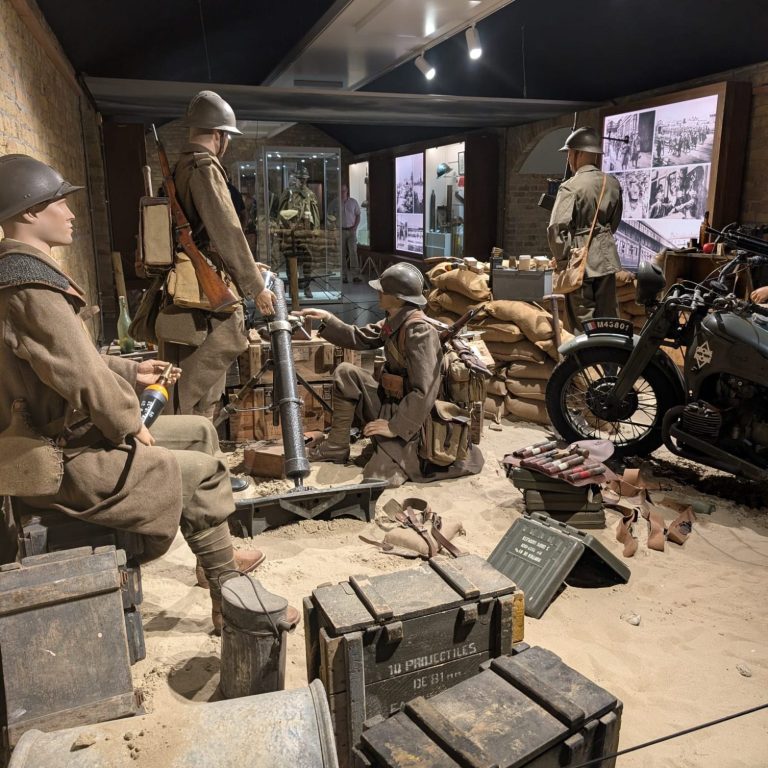
Further north, we reached the Dunkirk 1940 Museum (Musée Dunkerque 1940 – Opération Dynamo). The collection of artefacts, photographs, and personal accounts is deeply moving. The museum recounts the evacuation of more than 338,000 Allied troops in May–June 1940, when the beaches of Dunkirk became the stage for one of the most dramatic rescues of the Second World War. Standing there, it was impossible not to feel a wave of gratitude for the soldiers and civilians whose sacrifices shaped history.
Bray Dunes and Beyond
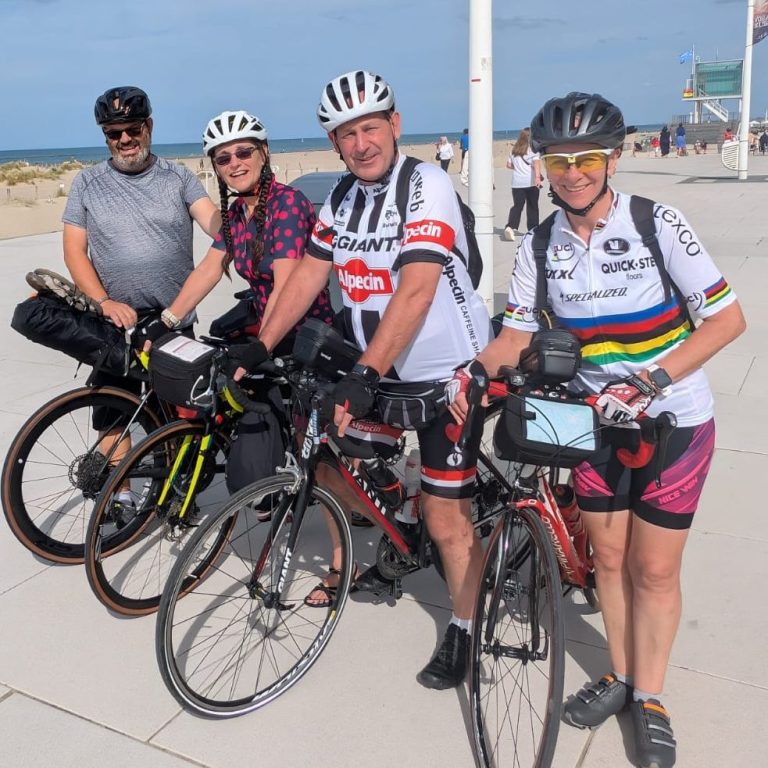
The sun was shining, so we pushed further north to Bray Dunes, France’s northernmost seaside town. The wide sandy beaches here were also part of the evacuation in 1940, yet today they are peaceful and inviting. We paused for coffee on the promenade, soaking in the sea air and the tranquillity that contrasted so sharply with the past.
Our return leg took us along the canal paths, where silence reigned. The towpaths were smooth, the water glistened, and the only sounds were the hum of our wheels and the occasional bird overhead. It felt as if we had the whole landscape to ourselves.
Loon Plage – A Quiet Rest Stop
By late afternoon, we checked into our Airbnb in Loon Plage, a small town just west of Dunkirk known for its links to both the port and the surrounding farmland. Dinner was a simple but satisfying affair stocked up at the local Carrefour, and we ended the day content, if a little weary.
Sleep, however, was elusive. The anticipation of the week ahead, the joy of being on the road, and the promise of new horizons left us all too excited to drift off easily.
Day One | Day Two | Day Three | Day Four | Day Five | Day Six | Day Seven | Day Eight | Reflection