Cyling Belgium & Northern France (Day 2)
From Canal Paths to the Last Post
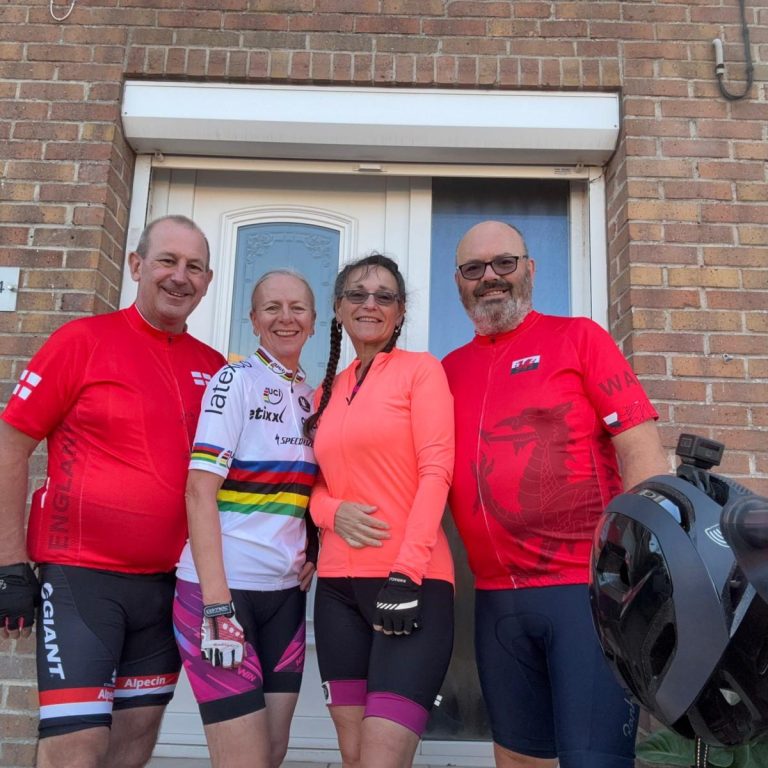
With our torpedo tubes reloaded and strapped firmly to the backs of our bikes, we tucked into breakfast at our Airbnb in Loon-Plage and set off on the next stage of our journey: the ride to Ypres.
Into Belgium
Heading north, we skirted the outskirts of Dunkirk before turning east. The cycle routes were immaculate, smooth tarmac, clear signposting, and hardly a car in sight. It was a refreshing
contrast to the chaos of UK roads. The only drawback? A striking lack of coffee stops. We
pedalled mile after mile through quiet countryside, our legs churning steadily while our caffeine cravings grew.
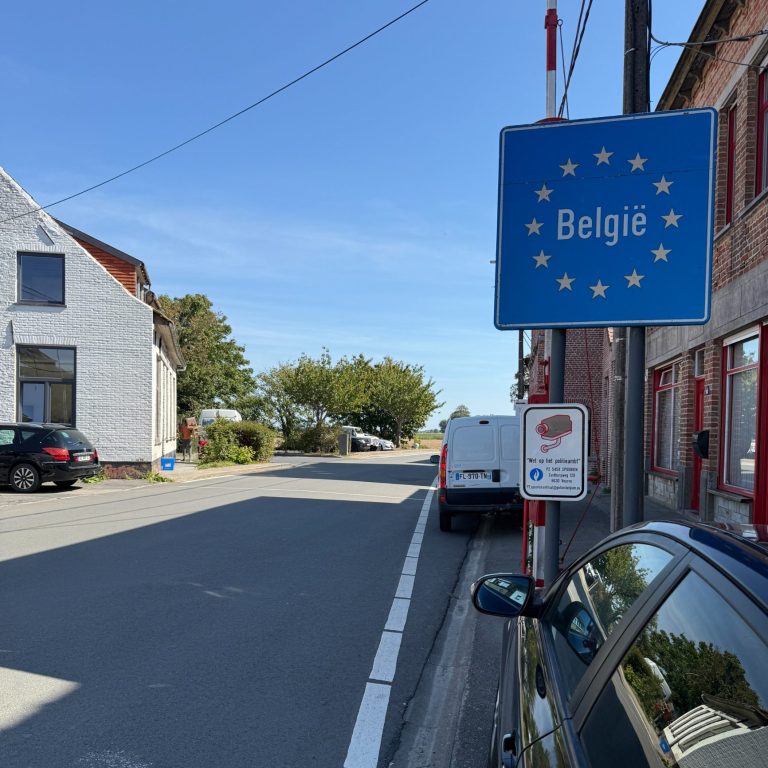
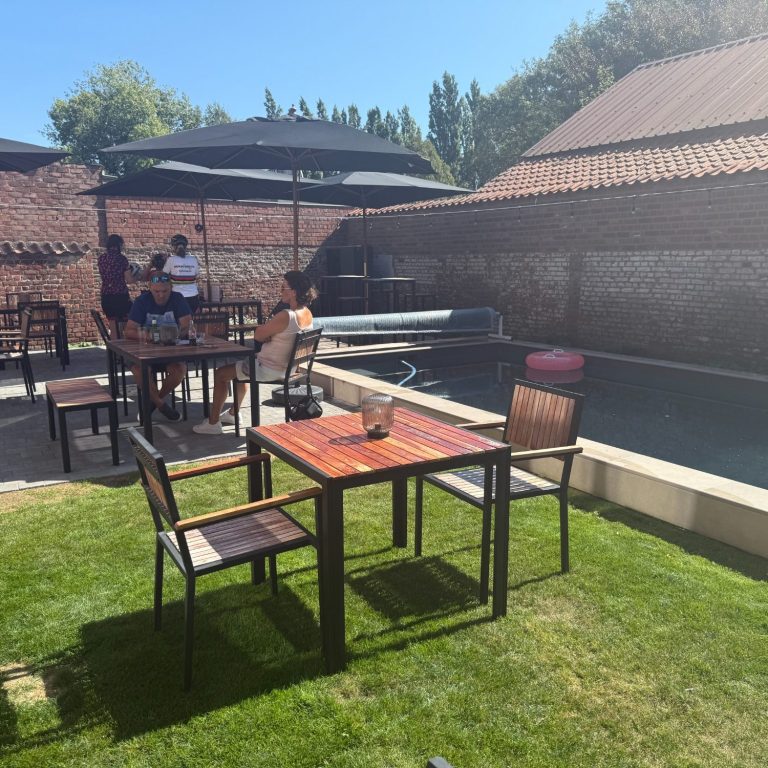
Relief came just across the Belgian border, at a charming pop-up bar called Het Tolkantoor. The hosts couldn’t have been more welcoming, ushering us into their sunny courtyard. To our
surprise, tucked away at the back was a small swimming pool. Sadly, our swimwear was buried at the very bottom of the torpedo tubes, out of reach without an unthinkable unpacking
session. Gareth and I were sorely tempted to dive in fully clothed. Instead, we settled for tortilla chips and dips, which felt like a feast after the morning’s long stretch.
Towards Poperinge
Back on the road, we cycled through fields of hops and farmland towards Poperinge, a town that played a poignant role in the First World War. Known as the “town of the poppies,” Poperinge was a safe haven behind the front lines where soldiers could rest. It was also home to Talbot House, a club founded in 1915 that offered a respite from the horrors of war, a place where rank didn’t matter and all were welcome. The tranquillity of the countryside around us made it hard to imagine the turmoil of a century ago.
Arrival in Ypres
For Andrea and I, arriving in Ypres felt like revisiting an old friend, though its impact never fades. After a long day in the saddle, the cobbled streets were both beautiful and brutal on tired legs. Salvation appeared in the form of a lively bar at the end of the street where our loft apartment was located. Outside, fellow cyclists greeted us warmly, asking where we had ridden from and where we were heading next. There’s an instant camaraderie among touring cyclists, shared miles create instant bonds.
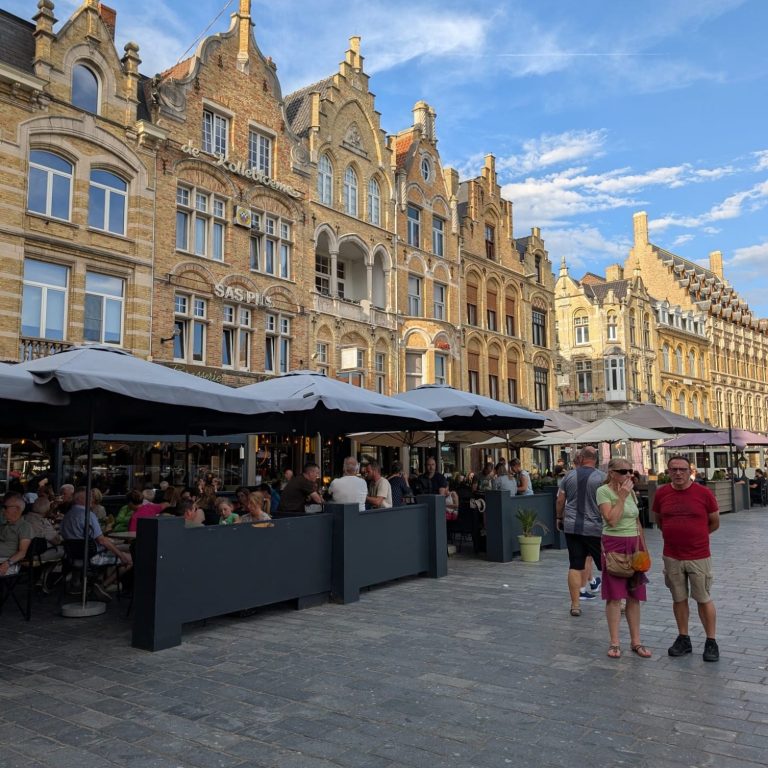
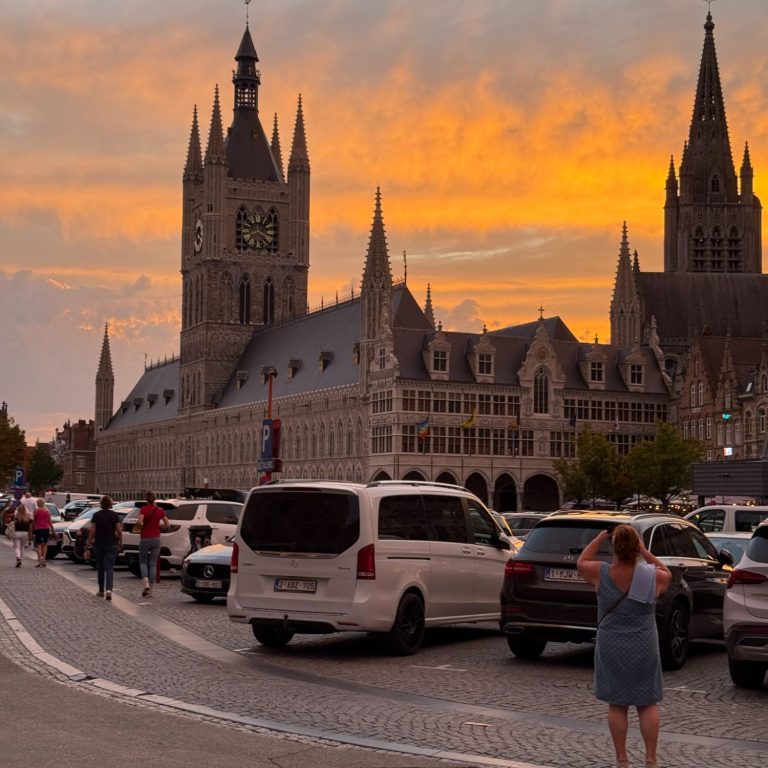
Our apartment itself was a treat: a spacious loft with a balcony terrace overlooking a tree lined cobbled street. After freshening up, we wandered into the centre, past the imposing In Flanders Fields Museum, housed in Ypres’ magnificent Cloth Hall.
The In Flanders Fields Museum
The museum takes its name from John McCrae’s famous poem, written nearby in 1915, and it’s one of the most moving places you can visit in Belgium. Inside, modern interactive exhibits bring the First World War to life: diaries, uniforms, weaponry, and personal stories of soldiers and civilians caught in the conflict. What makes it powerful is not just the scale of the history, but the focus on individual human experiences—you can almost trace the war through the eyes of one soldier or nurse.
The museum also explains why Ypres (Ieper in Flemish) became such a focal point of the war. Its location was strategically vital: the town sat on the route German forces needed to take to reach French ports on the Channel. As a result, it was fiercely contested and became the centre of the infamous Ypres Salient, a bulge in the Allied front line that was surrounded on three sides by
enemy forces.
The Battles of Ypres
There were five major battles fought around the Ypres Salient between 1914 and 1918. The names alone conjure up the scale of the tragedy:
- First Battle of Ypres (1914): The “race to the sea,” where British and French troops
- desperately tried to halt the German advance.
- Second Battle of Ypres (1915): Marked by the first large-scale use of poison gas on the Western Front, leaving devastating casualties.
- Third Battle of Ypres (Passchendaele, 1917): Perhaps the most notorious, fought in mud-filled craters where thousands drowned or were lost without trace. It became a symbol of the futility of trench warfare.
- Fourth & Fifth Battles (1918): Part of the final German offensives and the Allied counter-attacks that eventually ended the war.
The ground around Ypres became a quagmire of shell holes and trenches, soaked with rain and blood. Hundreds of thousands of soldiers from across the world died in these fields, British, French, Belgian, Canadian, Australian, New Zealand, Indian, South African, and many others. Today, the land is dotted with cemeteries and memorials, each one a silent testament.
Evening in Ypres
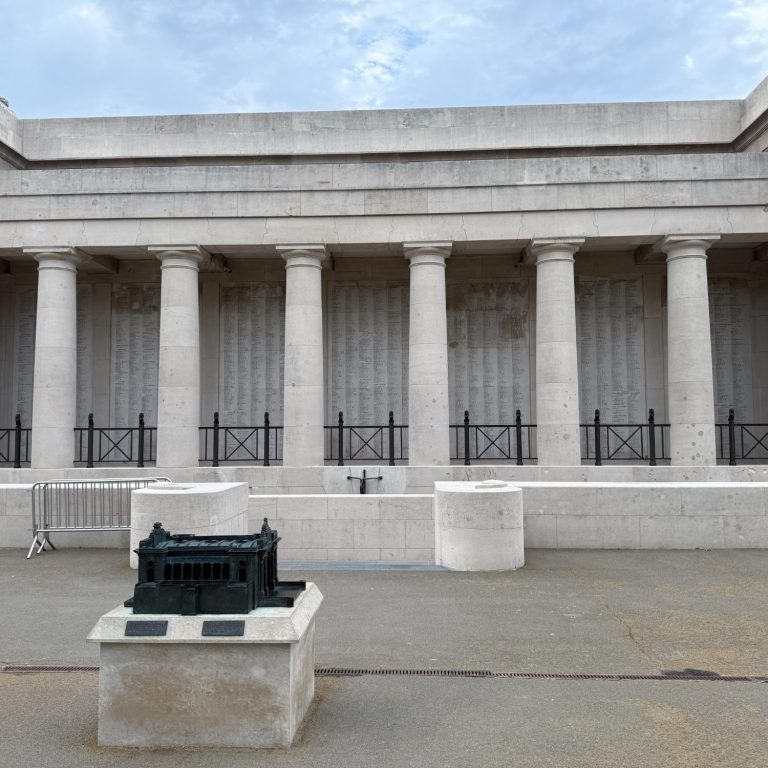
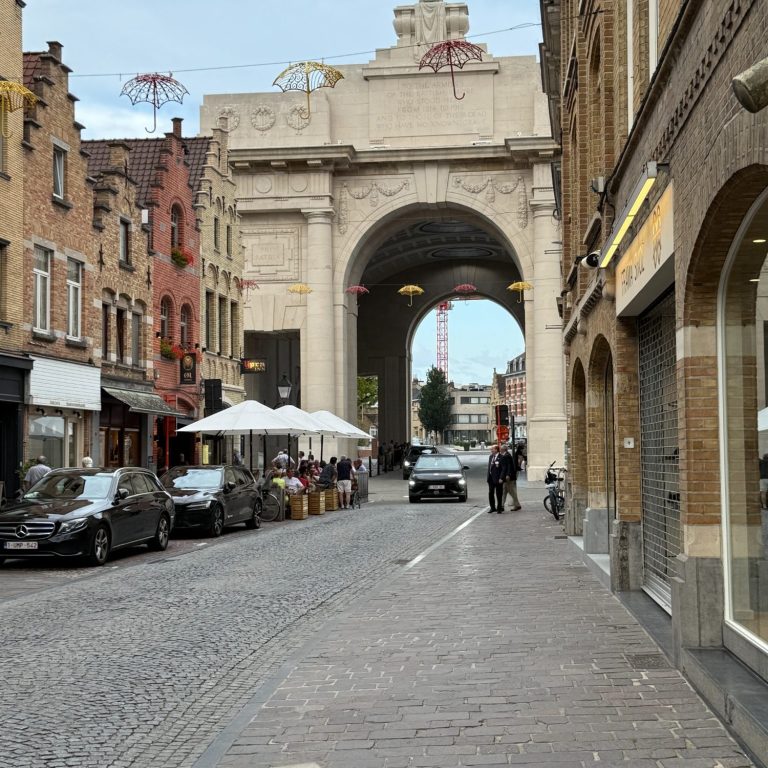
As the sun began to set, we joined the crowds heading towards the Menin Gate Memorial to the Missing, which bears the names of more than 54,000 Commonwealth soldiers who have no known grave. Last time we visited, the arch was being cleaning, but this time it stood proudly in the evening light.
At 7:20 pm, we took our places for the Last Post Ceremony. Since 1928, buglers from the local fire brigade have sounded the call here almost every night, pausing only during the German
occupation of the Second World War. The clear, haunting notes echoed through the arch as the crowd fell silent. It was a moment of deep reflection, and we were reminded once again that Ypres is not just a town, it is a symbol of remembrance.
A Place in Our Hearts
With full bellies and heavy hearts, we walked back to our apartment. Ypres is a place that demands more than one day to explore, two, even three, would hardly scratch the surface of its history. For us, though, the memory of this day will stay with us: cycling quiet roads, the warmth of Belgian hospitality, and the sobering reminder of lives lost in the fields around Ypres.
Day two was complete: from quiet French roads to the poignant streets of Ypres, where history whispers at every corner.
Day One | Day Two | Day Three | Day Four | Day Five | Day Six | Day Seven | Day Eight | Reflection